
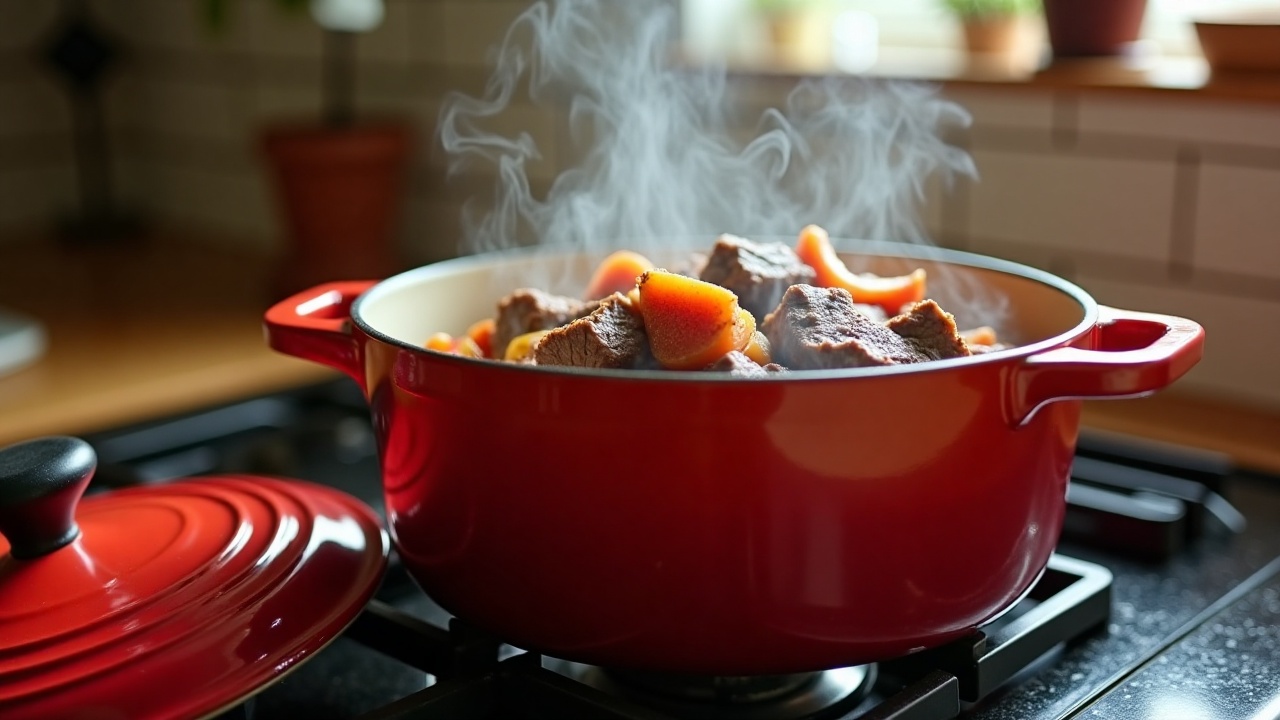
1. Size: match the pot to your table
What to decide: A pot that is too small forces you to cook in batches, and one that is too big is heavy to lift.
How to choose: Think about the biggest meal you cook in it. A 3.5-quart pot suits a small household or side dishes. A 6-quart pot handles a stew or a whole chicken for a family, and bigger pots are for crowds.
2. Material: cast iron or coated pan
What to decide: The material changes weight, heat holding and care.
How to choose: Enameled cast iron holds heat well and needs no seasoning, but it is heavy. A coated stainless or ceramic pan is lighter and easier to clean, but it holds heat less well and needs gentle utensils.
3. Weight: lift it before you buy it
What to decide: A full pot of stew is much heavier than the empty pot.
How to choose: If you have wrist or storage limits, weigh the pot plus the food. Heavy cast iron is a trade you make for even heat, so be sure you will actually lift it.
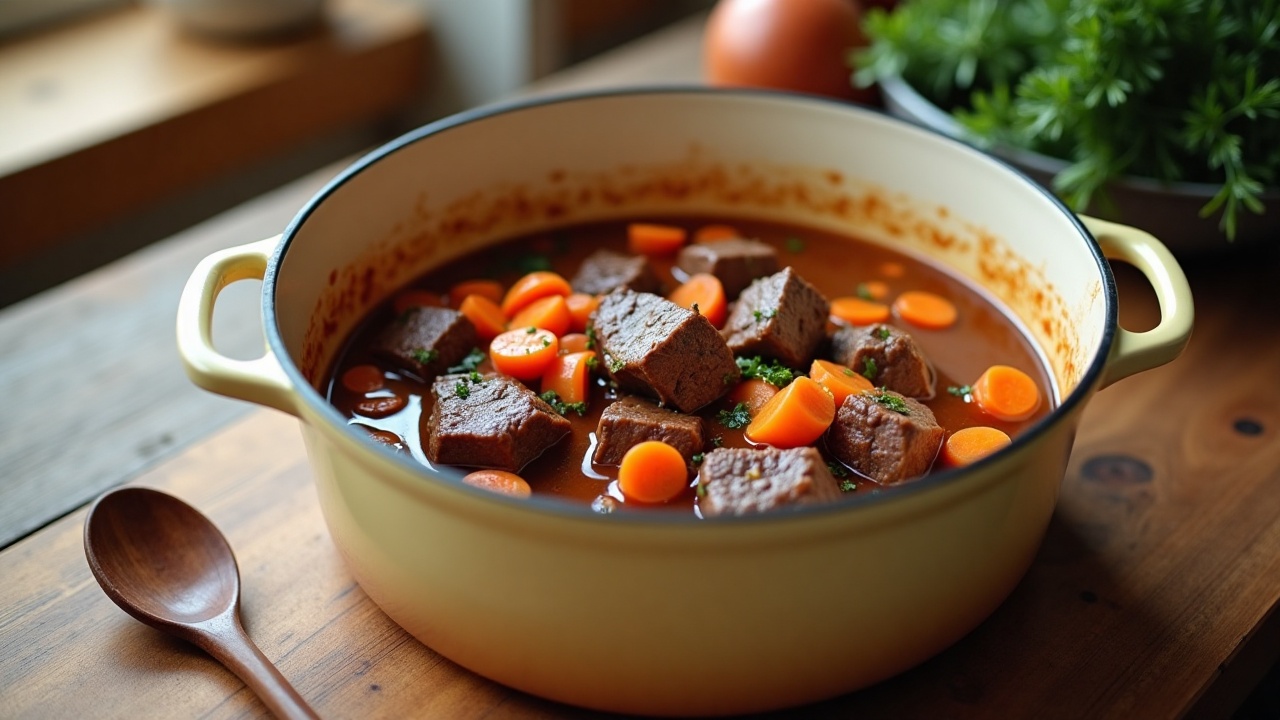
4. Oven and cooktop limits
What to decide: A Dutch oven has to go from stovetop to oven.
How to choose: Check the oven-safe limit on the listing, whether the lid knob is oven-safe and which cooktops it works on. Look for handles you can grip with oven mitts.
5. The lid and the shape
What to decide: A tight lid keeps moisture in, and the shape decides what the pot does best.
How to choose: A round pot suits stews and bread. A wide, shallow pot gives more surface for searing and braising. An oval roaster fits a large roast or a turkey breast better than a round pot.
6. Decide the job before the brand
What to decide: Most buyers use a Dutch oven for a few things over and over.
How to choose: If you braise, stew and bake bread, a cast iron pot earns its place. If you mostly cook big holiday meals once a year, a large roaster may be a better fit than a pot you will not reach for every week.
Three popular pots to compare
Le Creuset Enameled Cast Iron Round Wide Dutch Oven (3.5 qt)
Enameled cast iron that holds and spreads heat, works on all cooktops and in the oven to 500°F. At 3.5 quarts it is small for a crowd, and it is heavy when full.
$$$ Premium · 4.7★ (138)
Caraway 6 Qt Non-Stick Ceramic-Coated Rondeau Pot
A 6-quart ceramic-coated pot that goes from stovetop to oven to table and cleans easily. It holds heat less well than cast iron and needs gentle utensils.
$ Budget · 4.7★ (623)
IMUSA USA Heavy Duty Cajun Oval Aluminum Roaster (15 in)
A large oval cast aluminum roaster with steamer inserts, very well reviewed and good for holiday roasts. It is a roaster, not a classic Dutch oven, and weighs over 10 pounds empty.
$$ Mid-range · 4.7★ (3 601)
Some links on this page are affiliate links.
Images are for illustrative purposes only. Real product images are on Amazon.
Recipes and guides to cook in it
These pages put a Dutch oven to work:
- Instant Pot beef stew: a stew you can also braise in a pot.
- Beef barley soup: a long-simmered soup.
- Christmas Eve dinner ideas: a braise is the first idea.
- Holiday hosting kitchen essentials: tools for a party.
- Best kitchen gifts for people who love to cook: where a Dutch oven fits as a gift.